Keywords: evidence-based nutrition, nutrition research, biased research in nutrition, traditional foods benefits, diet clinic guidance, nutrition myths vs facts, scientific evidence in diet, unbiased nutrition advice, natural foods vs supplements





When it comes to diets, weight management, and nutrition, everyone today claims to be “scientifically proven.” But how much research truly counts as evidence, and how do we decide what to use in practice?
At our diet clinic, we believe in a balanced approach:
credible research + traditional food wisdom + real-world experience.
Here’s a clear guide to help you understand what counts as good evidence, what doesn’t, and why some of the best foods may never get funded studies.
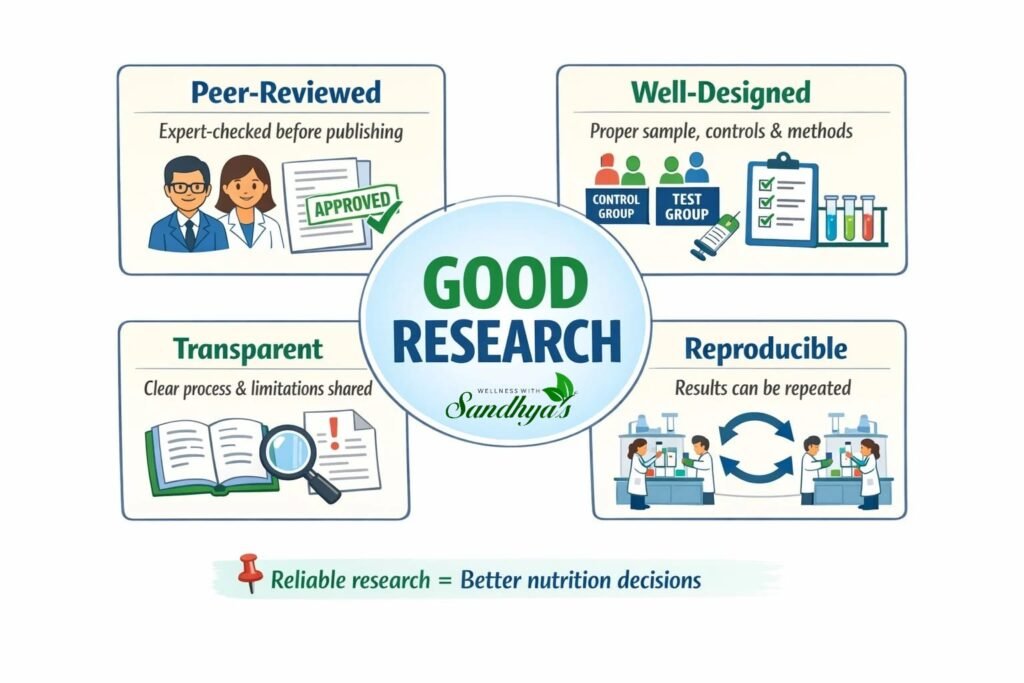
Good research is not simply any study, it must meet certain standards:
Modern research can study:
However, not all topics are equally easy to study, especially:
This is why we complement research evidence with clinical experience and cultural understanding.
Our approach blends science with practicality and tradition:
We assess the strength, quality, and consistency of research.
Many natural foods have been used safely and effectively for generations long before formal research existed.
We consider your health conditions, digestion, medical history, and overall lifestyle.
Evidence only matters when it can be implemented effectively through:
In India and many cultures, foods like turmeric, cumin, fenugreek, ginger, buttermilk, curd, millets, seasonal vegetables, homemade fermented foods, and many spices have been traditionally used for:
Today, modern research is confirming many of these benefits.
But even when studies are limited, these foods hold value due to:
So yes, traditionally believed foods count as evidence too, especially when used in their natural form.
It’s important to understand that research is not perfect.
Every study has drawbacks, such as:
This is why we don’t rely on a single study, we evaluate the total picture.
Biased research is research influenced by the interests of whoever funds or designs the study.
This can show up as:
Biased research creates the illusion of being “scientifically proven,” when in reality the evidence is weak.
One of the most important questions to ask is:
Because the funding source often affects the results.
For example:
But homemade curd or buttermilk rarely gets studied, even though they may offer similar or better benefits.
But natural fiber from vegetables, fruits, unpolished grains, seeds, lentils does not.
The reason is simple:
No company owns:
If something can’t be patented, it won’t generate profit.
And if there is no profit potential, companies don’t fund research.
This does not mean the food is ineffective.
It simply means no one pays to study it.
So even without expensive clinical trials, traditionally consumed foods can be highly effective when eaten in their natural form.
To give you the most reliable guidance, we use:
Evaluated for quality and bias.
Built from centuries of safe use.
Understanding what works with real clients.
This combination ensures your nutrition plan is:
Not all research is equal.
Not all funded studies are unbiased.
And not all powerful foods need research to prove their worth.
At our clinic, we use the best of science and the best of tradition to guide you toward healthy, sustainable, and meaningful results.